Multi-Region Uptime Monitoring: Why One Check From One City Lies to You
If your uptime monitor checks your site from a single location, you are not really monitoring uptime—you are monitoring "is my site reachable from one specific datacenter right now". For most production workloads, that is not enough.
The single-region trap
A monitor running from one cloud region will happily report 100% uptime while real users in another continent see timeouts. The internet is not a flat network: peering disputes, regional DNS issues, transit provider outages, and Anycast misroutes all create geographically scoped failures.
Worse, your single-region monitor is probably hosted by the same cloud provider you are. When AWS us-east-1 has an event, the monitor goes down with the site. You hear nothing.
What multi-region monitoring actually catches
Regional CDN cache poisoning where one PoP serves a broken response.
Geo-DNS misconfigurations that send European traffic to a dead US endpoint.
ISP-level routing problems and BGP withdrawals affecting one continent.
Country-specific blocks where your site quietly disappears for a market.
Latency regressions that only show up far from the origin.
How PingHarbor distributes checks
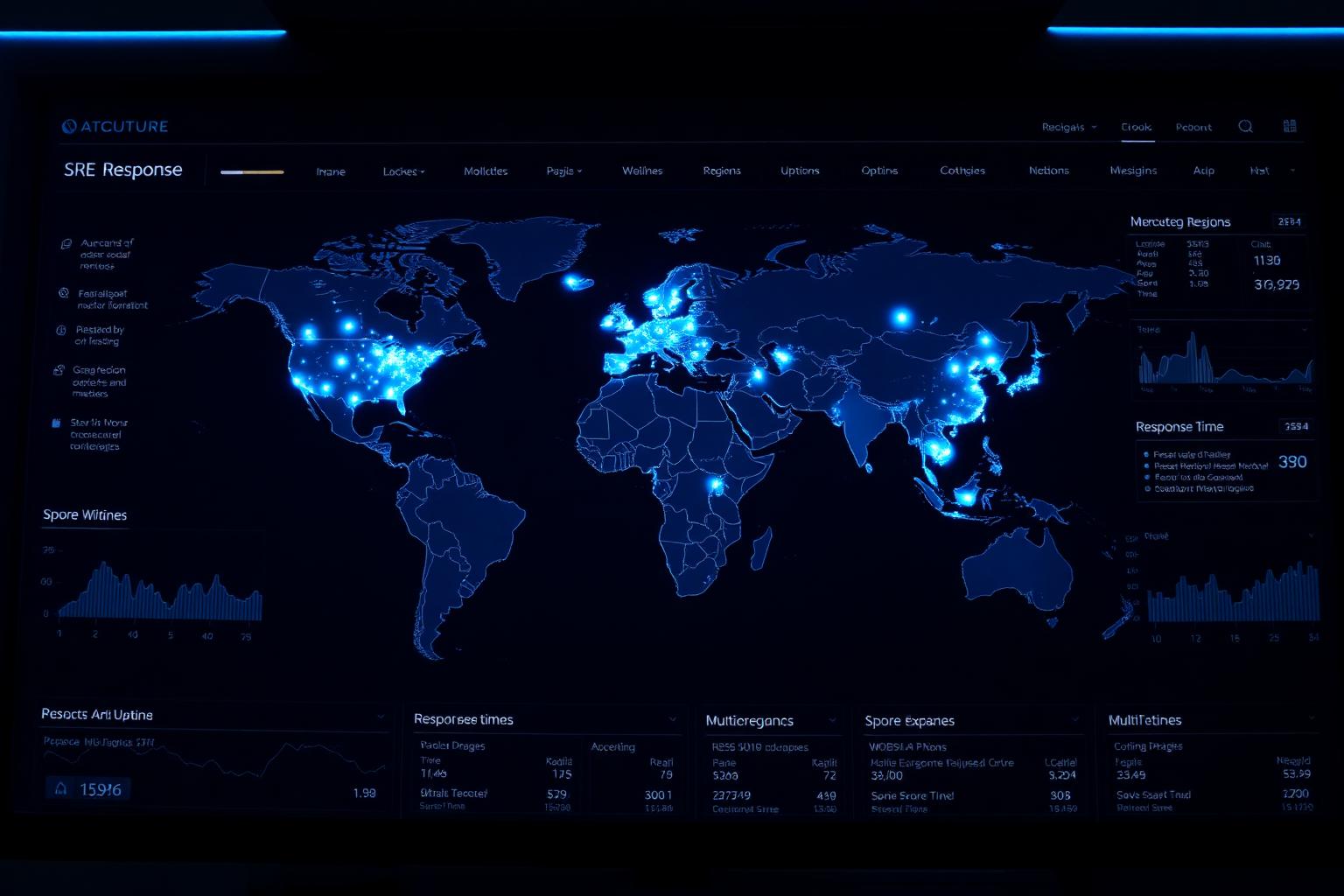
PingHarbor runs uptime probes from independent edge workers in North America (East and West), Europe, Asia (Singapore), and Australia. Every check is repeated from each region on its schedule, and we record per-region response time so you can see which part of the world is slow.
When a monitor goes down, we require confirmation from multiple regions before paging you. A single packet loss event in Sydney does not wake your team at 3 AM if Frankfurt and New York still see the site fine.
Reading the regional breakdown
Open any monitor in PingHarbor and you will see a regional response time chart. Look for these patterns:
One region consistently 2–5x slower: missing CDN PoP or bad routing.
One region flat-lining at zero: your site is unreachable from there only.
All regions trending up at the same time: real origin slowdown, not a network blip.
When single-region is enough
Internal tools, staging environments, or services that only serve one country can stick with one or two regions. Anything customer-facing on the open internet should monitor from at least three continents.
A monitor only tells you what one observer saw. The more observers you have, the closer you get to the truth.
Spin up a multi-region monitor in PingHarbor in under a minute—no configuration, just a URL.